
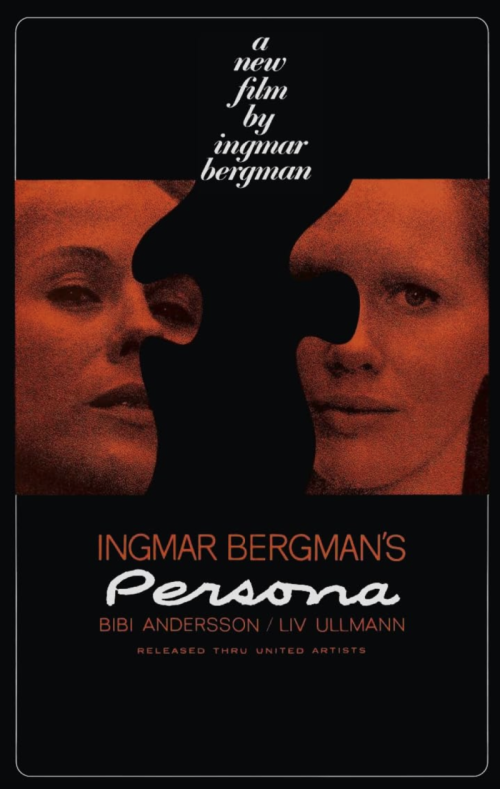
I rented the 1967 film “Persona” after reading multiple articles that referenced it in connection with other psychologically complex films. Since I had recently watched David Lynch’s surreal, open-ended “Mulholland Drive,” it seemed like the right time to give Ingmar Bergman’s classic a try.
The two films share some intriguing similarities — most notably, their exploration of the psychological bond and blurred identities between two women. “Persona” focuses on a nurse and her patient, whose personalities begin to merge in strange and unsettling ways. It’s an intense, cerebral dive into identity, silence, and emotional trauma.
If I hadn’t already seen some of Roman Polanski’s earlier films, like “Repulsion,” I might have been more shaken by “Persona.” But “Repulsion” — another raw, disturbing examination of the female psyche — had already prepped me to expect a certain level of intensity from 1960s European psychological cinema. Still, “Persona” is a strong example of how film can probe corners of the mind that most movies never attempt to reach.
Its experimental feel and avant-garde cinematography are reminiscent of surrealist works like Dali and Buñuel’s “Un Chien Andalou.”
The early scenes in “Persona” feel dreamlike and jarring, suggesting that film once served as a medium for deeply intellectual and artistic experimentation. It makes you wonder if we’ve lost something in today’s more commercialized cinema landscape.
