
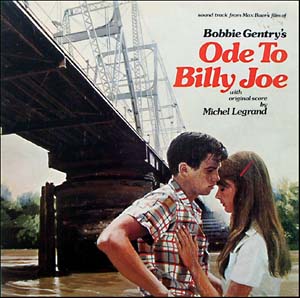
Well, today is the third of June — cue the cicadas, pour some sweet tea, and brace yourself for a wave of Southern melancholy. Because down here in Mississippi, we all know what happened on this date.
It’s the day poor Billie Joe McAllister jumped off the Tallahatchie Bridge.
Why did he do it? We may never know. Bobbie Gentry never said. And honestly, that’s part of what makes her 1967 hit “Ode to Billie Joe” so haunting and unforgettable. Was it guilt? Heartbreak? A scandalous secret? All we know is he tossed something off the bridge with Bobbie Lee Hartley (that’s her name in the movie adaptation), and then, as they say, “he jumped to his death.”

A Southern Gothic mystery wrapped in twang and storytelling.
If you’ve never heard the song, give it a listen and let it simmer. Gentry’s voice is low, smoky, and matter-of-fact as she narrates the tale over a family dinner, casually discussing Billie Joe’s death between bites of black-eyed peas and passes of the biscuits. It’s the kind of storytelling that chills you because it feels too real.
🎬 Movie Time: Did You Know Jethro Directed It?
Now here’s where it gets even more Southern-strange. In 1976, “Ode to Billy Joe” was adapted into a film — and it was directed and produced by none other than Max Baer Jr. Yep, that Max Baer Jr. Jethro Bodine from “The Beverly Hillbillies” traded his cement pond for the Tallahatchie River and turned one of the most enigmatic country songs of all time into a full-blown cinematic drama.
The film was shot for just $1 million but went on to make $27 million at the box office — a huge hit in its day. And for us Mississippians, it’s got some local pride woven in. At least part of it was filmed right here in our state. You can find old articles about scenes shot in Vaiden, and someone recently told me more footage came from Itta Bena. Southern soil runs deep in this story.
📻 Southern Songs That Tell a Story
Lately, I’ve been craving more of those old-school, narrative-style songs — the kind that unfold like short stories set to music. Last night, I stumbled across “Harper Valley P.T.A.” (1968) for the first time in years. Remember that one? A spunky mom marches into a school meeting to call out the local hypocrites, and we’re all left cheering. You can’t forget it, because it says something — and it’s fun.
That song, much like “Ode to Billie Joe,” latches onto your brain and won’t let go. It’s storytelling with sass.
And here’s another fun fact that might surprise you if you didn’t grow up on country records: Reba McEntire’s hit “Fancy” was originally written and released by Bobbie Gentry in 1969. Yep, that Fancy — the one in the red satin dress with the tragic backstory. Once again, Bobbie Gentry proves she’s the queen of emotionally charged, richly drawn narratives set to music.
🎶 Gentry, Gone But Never Forgotten
What happened to Bobbie Gentry? That’s another mystery. She faded into the shadows in the early 1980s and hasn’t made a public appearance since. Maybe she liked keeping her secrets. Just like Billie Joe.
But even in her silence, her songs keep talking. If you’ve never seen her perform “Ode to Billie Joe,” look fro the clip on YouTube.
So on this third of June, let’s raise a glass of iced tea to storytelling, to secrets, and to the power of a good song to leave you wondering long after the last note fades.
🎤 Got a favorite narrative song or a memory tied to Ode to Billie Joe? I’d love to hear about it. Email me at the link above.

You must be logged in to post a comment.