All posts filed under: CIVIL RIGHTS

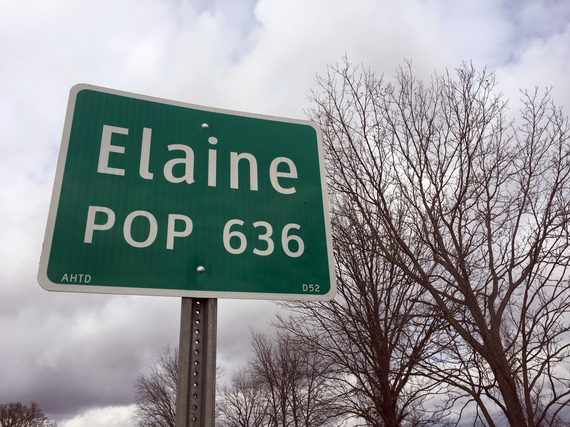
The population sign for the town of Elaine, Arkansas.

The Elaine Lynchings: A Visit to Elaine, Arkansas, 100 years after America’s deadliest race riot

Today, one year after the turmoil in Ferguson, Missouri, race riots sparked by alleged profiling, discrimination and police militarization are still making headlines in America. But in 1919, Elaine, Arkansas, was the center of the country’s deadliest race riot.

Birdhouses hang everywhere in the dying Delta town of Elaine, Arkansas — a distraction from the blight, neglect and century-old history of a county where hundreds of black men were lynched in 1919.

On Lee Street, a diner has “Open” and “For Sale” signs in a window, but no one is there.

A graphic of a hand holding a phone with the TikTok logo on it.

The TikTok Debate: Digital Freedom Versus Data Dystopia

’ve been a TikTok user for a few years now, and while I enjoy it, my bio pretty much sums up how I feel. It reads: “A person who isn’t really sure if TikTok is exciting or terrifying.”

That idea may capture the larger debate we’re having in the U.S. about TikTok. The discussions raise important questions about free speech, national security, and how we can protect users while keeping our digital freedoms intact.

After the recent Supreme Court hearing on the possible TikTok ban, two big questions come up: Does restricting a major platform push us closer to the authoritarianism we’re supposed to be against? Is a foreign platform, one that collects user data, a future dystopian threat?

University of Mississippi (UM) students are being challenged to delve deeper into complex issues about the university and state thanks to a special Honors College class designed to explore important topics 60 years after James Meredith’s enrollment as UM’s first Black student.

Veteran Journalist Leads Special Honors College Class Exploring the University and State 60 Years after Meredith’s Enrollment

University of Mississippi (UM) students are being challenged to delve deeper into complex issues about the university and state thanks to a special Honors College class designed to explore important topics 60 years after James Meredith’s enrollment as UM’s first Black student.

“I would describe this class as an open dialogue about the past, present, and future of both the university and the state as a whole,” said McKenzie Cox, a journalism and political science double-major from Concord, North Carolina, who is planning to pursue a career in broadcast news reporting and policy analysis.

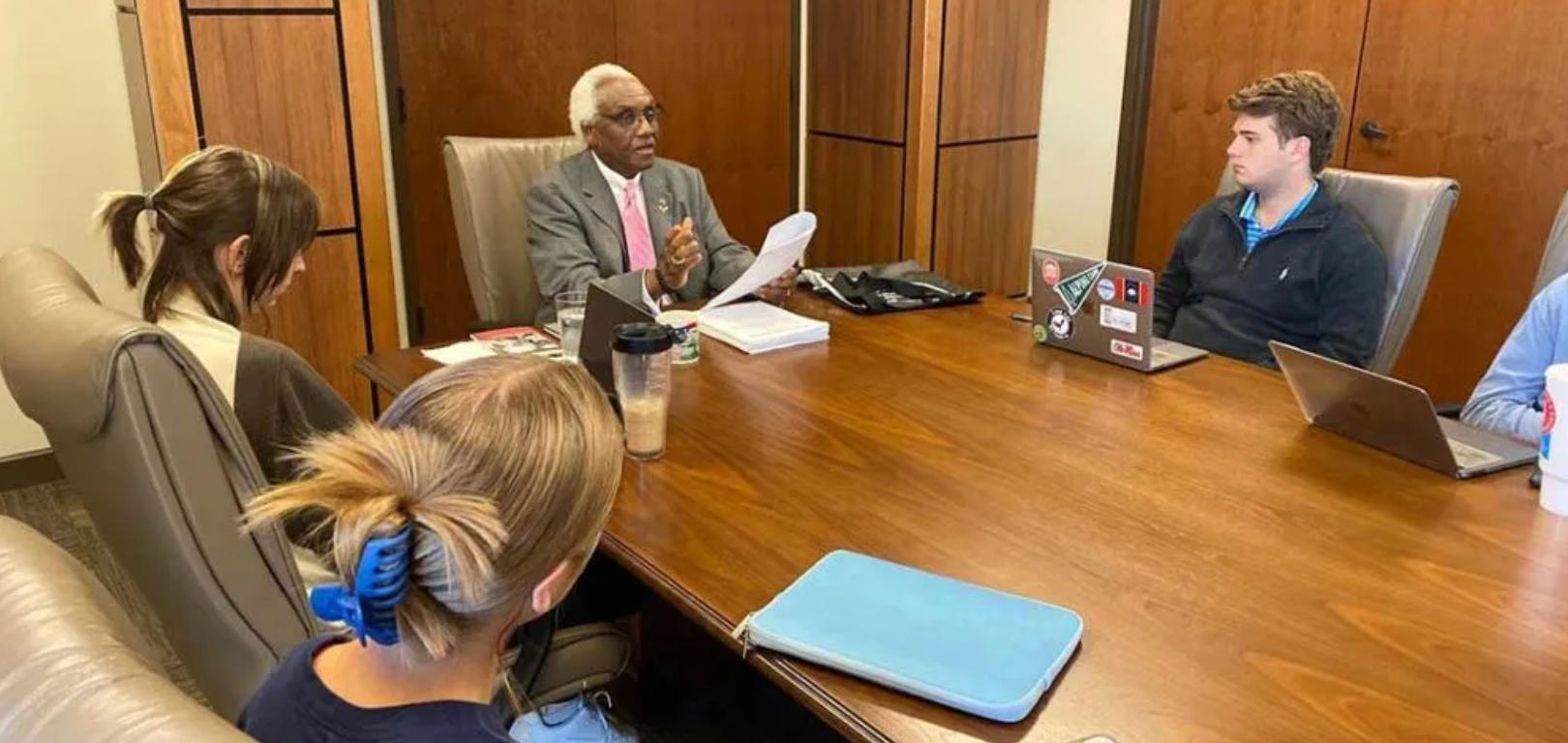
Former civil rights activist, educator and politician Leslie-Burl McLemore speaks to students in ‘The University and the State, 60 Years After the Crisis’ class at the UM Sally McDonnell Barksdale Honors College. Led by retired journalism professor Curtis Wilkie, the class explores Mississippi’s past and present. Photo by LaReeca Rucker

Veteran journalist leads exploration of Ole Miss, state

University of Mississippi students are being challenged to delve deeper into complex issues about the university and state, thanks to a special honors class designed to explore important topics 60 years after James Meredith’s enrollment as UM’s first Black student.

“I would describe this class as an open dialogue about the past, present and future of both the university and the state as a whole,” said McKenzie Cox, a journalism and political science double-major from Concord, North Carolina, who is planning to pursue a career in broadcast news reporting and policy analysis.

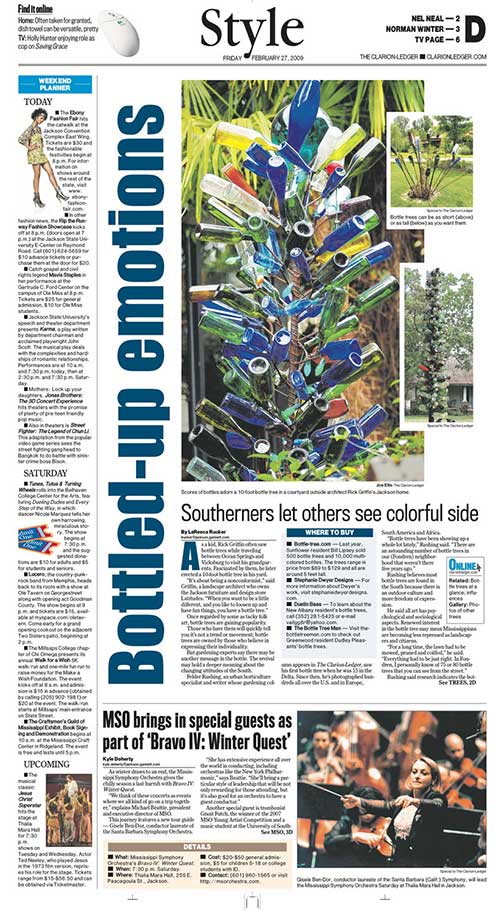
A news article about the popularity of bottle trees featuring a multicolored bottle tree.

Why bottle trees are making a colorful comeback in Southern gardens

Rick Griffin, a Jackson landscape architect, grew up seeing bottle trees on trips between Ocean Springs and Vicksburg. Fascinated by their charm, he built a 10-foot bottle tree in his own yard, calling it a symbol of fun and individuality. “It’s about being a nonconformist,” he says.

Once dismissed as kitschy folk art, bottle trees are now booming in popularity across the South, especially in neighborhoods like Fondren, where urban horticulture expert Felder Rushing has documented a sharp rise in their numbers. Rushing believes this trend reflects a cultural shift toward more relaxed, expressive outdoor spaces. “For a long time, lawns had to be perfect. Now, people feel freer to add personality and history to their yards,” he explains.