
I’ve long believed that science fiction writers are prophets — tapping into some strange current of the universe and channeling visions of what’s to come. But maybe it’s not just sci-fi authors. Maybe any writer of fiction, when fully immersed in the act of creation, opens a door to something deeper — something unknowable. Something eerily accurate.
Take “The China Syndrome,” for example.

Released by Columbia Pictures on March 16, 1979, the film stars Jane Fonda and Michael Douglas as journalists uncovering dangerous safety coverups at a nuclear power plant — culminating in a near meltdown. A nuclear expert in the film even warns that a disaster could require the evacuation of an area “the size of Pennsylvania.”
Twelve days later, reality echoed fiction. The Three Mile Island nuclear accident occurred in — yes — Pennsylvania. Coincidence? Maybe. But it makes you think.
Or consider “Futility,” an 1898 novel by Morgan Robertson that tells the tale of an “unsinkable” ocean liner named the Titan that strikes an iceberg in the North Atlantic and sinks, killing more than half its passengers. Fourteen years later, the Titanic met almost the same fate.
The parallels are uncanny:
- Both ships struck ice in April, 400 miles off the Newfoundland coast.
- Both were touted as unsinkable and lacked enough lifeboats.
- Both were roughly the same size and traveling at high speed when disaster struck.
- And both suffered massive loss of life.
You don’t have to believe in prophecy to feel the chill of that parallel. Did Robertson see the future, or just do such meticulous research that he crafted a story so close to real-world possibilities it became inevitable?

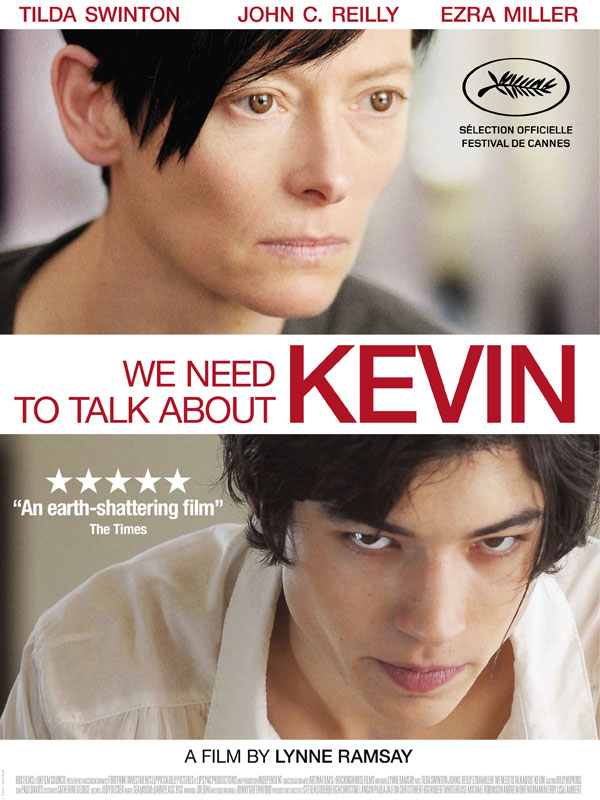
That question came to mind again after the Sandy Hook school shooting in Connecticut. I couldn’t stop thinking about “We Need to Talk About Kevin,” a 2011 film starring Tilda Swinton based on the 2003 novel by Lionel Shriver.
In it, Swinton plays a mother struggling to raise a child who seems disturbed from the very beginning. That child eventually becomes a teenage killer — murdering classmates with a bow and arrow after slaughtering his own family. It’s a disturbing, intimate look at a mother’s guilt, fear, and helplessness.
The film was shot in April 2010 in Stamford, Connecticut — the same state where Adam Lanza would later commit the deadliest school shooting in U.S. history. Lanza, like the fictional Kevin, killed his mother at home before turning his wrath on a school full of children.
It makes you wonder: does art influence life, or does life inspire art? Could fiction foreshadow tragedy?
The Connecticut was just one of many school shootings. Here’s a refresher about some of the earlier ones that captured nationwide attention:
- In 1997, 16-year-old Luke Woodham murdered his mother before killing two classmates at Pearl High School in Mississippi.
- In 1998, Kip Kinkel killed his parents, then opened fire at Thurston High School in Oregon.
- In 1999, Eric Harris and Dylan Klebold plotted for a year before killing 13 people and themselves at Columbine High School in Colorado.
One of the darkest schoolyard attacks in U.S. history actually occurred in 1927, in Bath, Michigan, when school treasurer Andrew Kehoe detonated explosives at Bath Consolidated School, killing 38 children and six adults, including himself. Kehoe had been stockpiling explosives for more than a year.
It’s chilling how many of these tragedies follow a similar blueprint: parental murder, methodical planning, and a final explosion of violence — usually at a school.
These aren’t just isolated acts of madness. They form a pattern. A thread. And perhaps, if we pay close enough attention to these threads — especially in art and storytelling — we might begin to see warning signs sooner.
When fiction mirrors reality so precisely, we should stop and ask: are writers predicting the future, or are we just not listening?
I can’t say for sure whether Adam Lanza ever watched “We Need to Talk About Kevin” — but I do know his father reportedly lived in Stamford, where the movie was filmed. Another eerie coincidence? Or another thread in a story that keeps repeating?
Maybe we’ll never fully understand the link between imagination and prophecy, between fiction and fate. But in a world where tragedies like these keep happening, it’s worth asking if our stories are trying to tell us something before it’s too late.

You must be logged in to post a comment.